
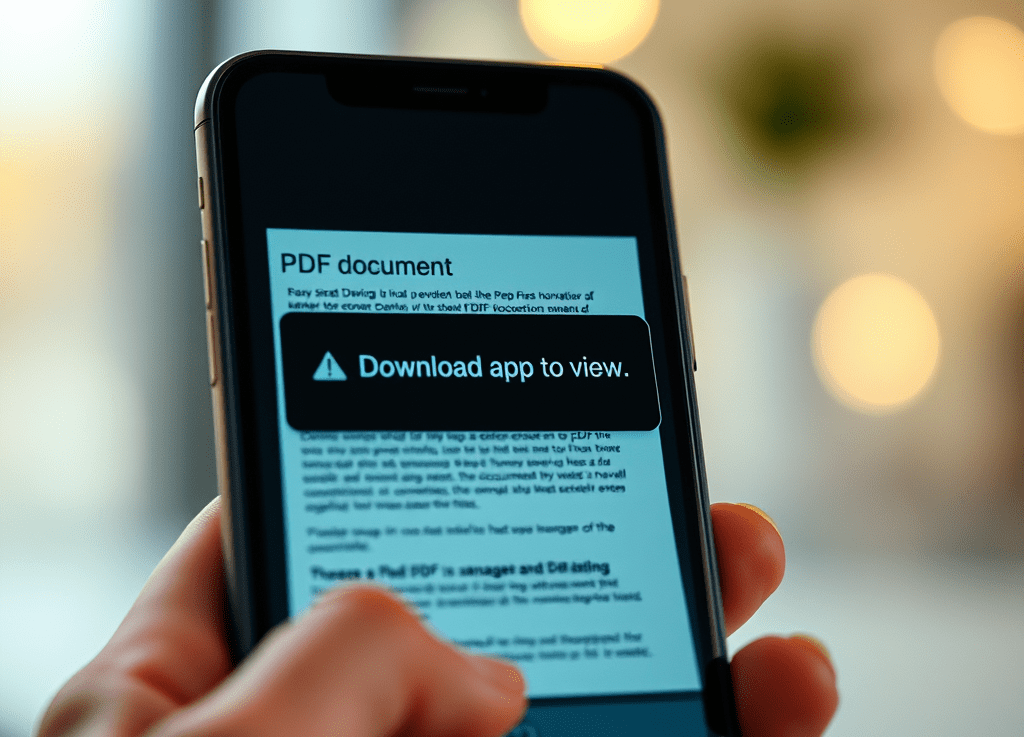
Hello… Y2K is calling, and they want their PDFs back!
While Portable Document Format (PDF) was released in 1993 and became an open standard in 2008, it’s increasingly out of place in today’s digital landscape. PDFs create unnecessary friction for users, especially in our mobile-first, fast-paced world.
The truth is, PDFs are primarily useful for one thing: printed formats.
In this article, we’ll cover six compelling reasons why PR and Marcomms practitioners should avoid using PDFs.
1. PDFs Aren’t Mobile-Friendly
Where mobile dominates content consumption, PDFs fall short. Designed with a fixed layout, PDFs are optimised for desktops or print, not mobile devices. Viewing them on a phone often means endless zooming and panning, creating a frustrating user experience. According to research, 50% of global web traffic now comes from mobile devices [source: Statista, mobile share of web traffic].. The awkward layout discourages engagement, particularly when users expect quick, seamless access to information.
2. PDFs Are Inaccessible
PDFs often create barriers for users, especially for those who rely on assistive technologies. Many PDFs are not properly formatted for screen readers, making it difficult for visually impaired users to navigate the content. The Web Content Accessibility Guidelines (WCAG 2.1) emphasize that web content should be accessible to all users, but poorly formatted PDFs often fall short of these standards. Additionally, users must download the file before viewing, which can be inconvenient, particularly on mobile devices or for users with limited data or storage space [source: WebAIM, PDFs and Accessibility].
3. PDFs Lack Data Traceability
Once a PDF is sent, it disappears into a black hole. There’s no way to track who opened it, how long they engaged with it, or which sections caught their attention. This lack of data makes it nearly impossible to measure the effectiveness of your communications, a crucial element for today’s PR and Marcomms teams. In a world driven by data analytics, this is a major drawback. Modern digital formats, like HTML or interactive web pages, offer insights into user behavior—allowing PR pros to adjust their strategies in real-time.
4. PDFs Lack Interactivity
While PDFs can include images and hyperlinks, they fall short in offering true interactivity. Users can’t engage with dynamic content like embedded videos, forms, or interactive elements that enhance storytelling and engagement. Additionally, extracting text from PDFs is often a frustrating, time-consuming task, limiting the ways your audience can interact with the content.
Today’s digital platforms offer far more in terms of engagement, allowing users to interact with multimedia, explore links seamlessly, and even participate in surveys or other interactive experiences.
5. PDFs Are Difficult to Share
Due to large file sizes, especially when they contain images or graphics, PDFs can be cumbersome to share. In PR, attaching large PDFs to emails is a well-known pitfall:
Slower delivery: Large attachments can delay email delivery and consume unnecessary mobile data.
Spam filters: Large files increase the likelihood that your email will end up in a spam folder, meaning your carefully crafted message may never be seen.
Modern alternatives, like sharing a cloud link or embedding the content in an email, are far more effective and user-friendly.
6. You May Risk Breaching Accessibility Standards
Under the Equality Act 2010, public sector organisations in the UK are required to make their content accessible to all, including individuals with disabilities. This often involves providing alternatives to PDFs, which can be difficult for those using assistive technologies like screen readers. In December 2020, the UK government updated its content design guidance, advising against the use of PDFs for online content in favor of more accessible formats, such as HTML.
Although this primarily applies to public sector organizations, private companies that deal with a broad audience—especially those with disabilities—should also aim for accessible formats to meet best practices under standards like WCAG 2.1. While not a legal requirement for all businesses, failure to provide accessible content could risk reputational damage and potential complaints.
Switching to web-friendly formats ensures that your content is more widely accessible and compliant with modern accessibility standards.
Read more about the UK government’s guidelines for accessible documents.
Conclusion
While PDFs may have their place in printed formats, they are increasingly out of touch with today’s digital, mobile-first world. From accessibility to traceability and interactivity, the drawbacks far outweigh the benefits.
The solution? Digital-first content. This type of content can be easily accessed through any browser, on any device, without the need to download third-party software. It’s faster, more interactive, and provides invaluable insights through data tracking.
Ace Media provides a comprehensive suite of digital-first solutions tailored for PR professionals, empowering you to engage your audience more effectively and accessibly than traditional PDFs allow. Whether sharing news releases, reports, or lookbooks, Ace Media’s offerings are designed to enhance your entire PR workflow, ensuring seamless communication and interaction with your target audience.
 Tips & Hints